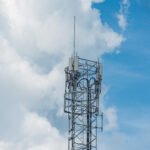
South Korea has unveiled the second stage of its smart port project in Busan in an attempt to modify one of the most active shipping centers of the globe into a completely digitalized logistics environment. As provided in an article by The Korea Herald, the project is scheduled to combine the 5G-enabled tracking, automated cranes, and real-time data communication between global shipping operators. Even as the infrastructure push is being hailed as a big step towards digital trade efficiency, preliminary system test runs have shown a more insidious nature of maintaining smooth mobility of the devices and the people moving between international networks inside the port zones.
At the Intersection of Logistics and Network Multifacetedness
Ports are no longer merely physical places, but highly data-heavy zones, which interact with thousands of other connected devices at once. Since cargo sensors and handheld terminals that workers use are always connected, it is mission-critical and always. Nonetheless, such ports as Busan are at the cross of several international telecommunication networks. The arrival of ships that may belong to other countries with diverse roaming arrangements makes the connectivity environment a very complex and demanding place.
To control this, operators are deploying roaming testing solution more and more to test network performance under these dynamic situations. The port environment, is in contrast to traditional consumer roaming, machine-to-machine communication, low-latency applications, and continuous data exchange in port environments need to be tested.
Industry analysts such as Telcovas observe that a solid roaming testing platform would assist to augment actual-time logistical procedures such that tracking systems, automated procedures and communication lines operate flawlessly. Telcovas has also partnered with telecom providers who have been engaged in smart port implementation to bring about formal validation procedures.
Creating Reliability in Online Trade
Economic effects of connectivity failure in ports are high. Any delay in data transmission may interfere with the schedule of cargo handling, supply chain, and raise the cost of operation. As a way of reducing these risks, the telecom operators are incorporating a roaming testing solution in the deployment phase and also in maintenance. Constant validation will make sure the performance of the networks is constant, despite the changes in the traffic patterns. This is being facilitated by automation. When there is a compilation of thousands of devices, it is impossible to do so manually. An automated roaming testing solution will enable the operators to keep track of the performance in real time and respond swiftly to anomalies.
Telcovas focuses on the importance of predictive analytics that gains more and more significance. Through the analysis of the historical data, operators should be able to predict the problems that could arise and to optimize their frameworks of roaming tests to that. Another imperative factor is security. Ports contain sensitive trade information and hence a potential cyber threat. Ensuring security checks in a roaming testing solution would prove to verify authentication systems and guard against unauthorized access.
The significance of the sound telecom systems becomes more pronounced as South Korea remains the frontrunner in the development of the smart infrastructure. Connection is no longer only a support activity, but a part of operational effectiveness. A scalable roaming testing solution is becoming a very important enabler in this changing environment, to ensure that the digital backbone of global trade is robust, secure and smooth.